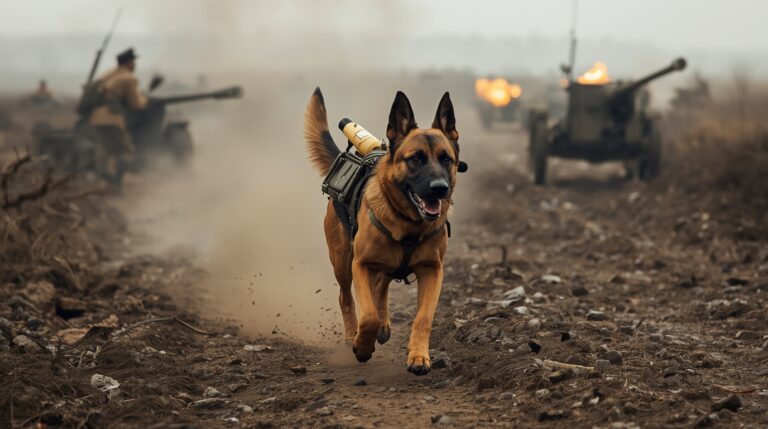
German Shepherd dog detecting mines for soldiers during World War II battlefield operations

Dogs in World War II: Mines, Guards, and Sled Teams

Introduction During World War II, as mechanized warfare evolved, so did the strategic role of military animals—especially dogs. Unlike their largely ad hoc roles in WWI, dogs in WWII were trained systematically for tactical and logistical functions. They detected land mines, guarded military installations, and even formed sled teams in arctic environments. This article explores…

Border Collie herding sheep, Siberian Husky pulling sled, and Golden Retriever fetching game – the evolution of working dogs

 History of Working Dogs (Shepherds, Sled Dogs, Retrievers)

Early Domestication and Human-Dog Partnership Dogs are the first domesticated species. Archaeological remains from as early as 14,000 BCE show dogs buried alongside humans. Initially scavengers, wolves evolved into early working companions, guarding camps and assisting in hunts. From Wolves to Work Companions Genetic mutation and selection created dogs with traits favoring cooperation. Humans noticed…

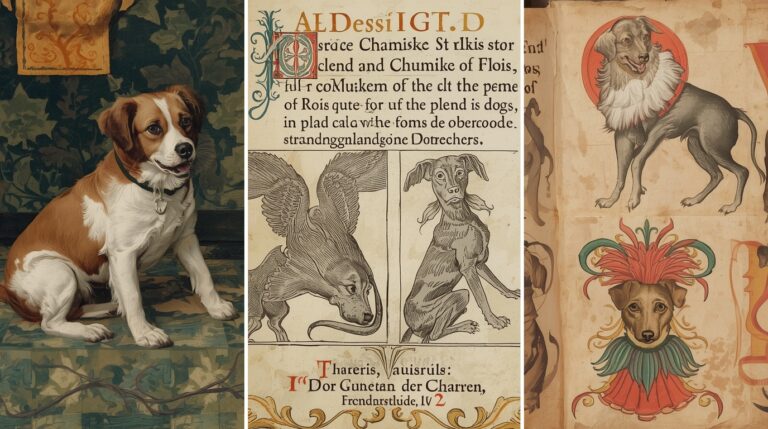
Dog depicted in Renaissance portrait and literary texts

Dogs in Renaissance Art and Literature

Introduction: Dogs in the Renaissance Imagination The Renaissance was a period of artistic and intellectual awakening, not just for humans but for their animal companions as well. Among all creatures, dogs held a unique place in art and literature, embodying ideals of fidelity, nobility, and emotional depth. As Europe’s cultural identity evolved, dogs became visual…

Sacred dogs in Hindu mythology with deities and temple backdrops in Ancient India

Dogs in Ancient India and Hindu Mythology

Introduction: The Spiritual Significance of Dogs in Indian Civilization Dogs have walked beside humanity for millennia, but in Ancient India, they assumed roles far beyond mere companionship. Dogs appear in the Vedas, epics like the Mahabharata, and temple iconography, often embodying concepts of loyalty, dharma, guardianship, and spiritual power. They are revered in myth, feared…

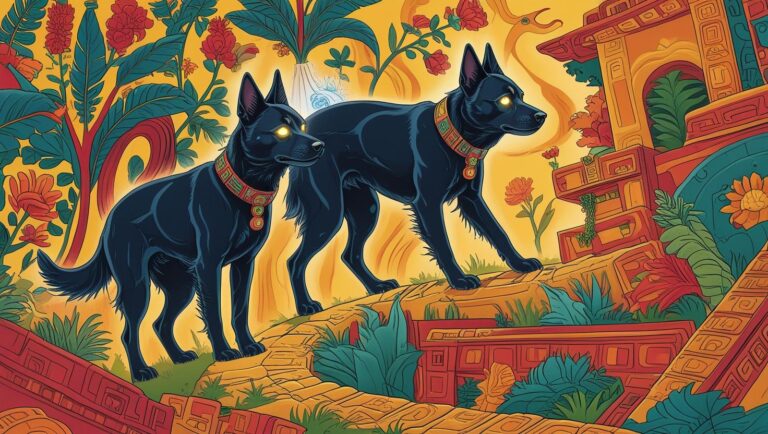
Sacred dogs in Aztec and Mayan cultures depicted as spiritual guides and mythological figures

Dogs in the Aztec and Mayan Civilizations

Introduction: Dogs in the Heart of Mesoamerican Culture Dogs played profound spiritual, practical, and symbolic roles in both Aztec and Mayan civilizations. Far beyond mere pets, these animals were believed to escort souls to the underworld, serve as companions to gods, and act as offerings in sacred rituals. The presence of dogs in mythology, burial…

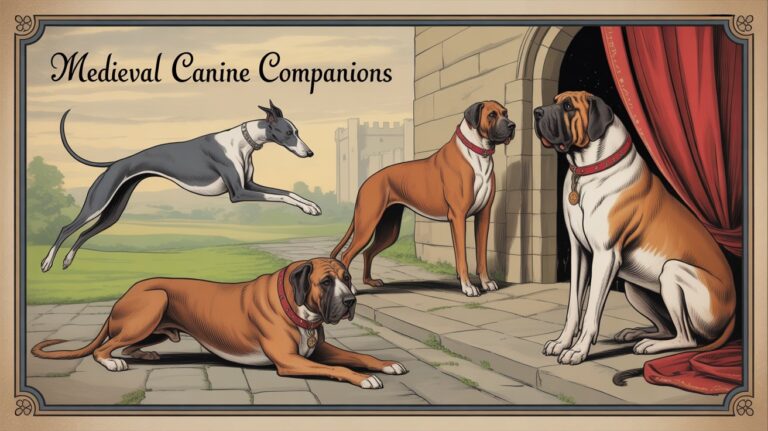
Greyhound, Talbot, and Mastiff dog breeds from medieval Europe

Dog Breeds Developed During Medieval Times

Introduction: The Rise of Specialized Dog Breeds in Medieval Europe The Middle Ages marked a transformative era for dog breed development, giving rise to some of the most iconic canine lineages we know today. Driven by the feudal structure, religious institutions, and the aristocracy’s demand for specialized functions, dogs were systematically bred for distinct tasks—guarding,…

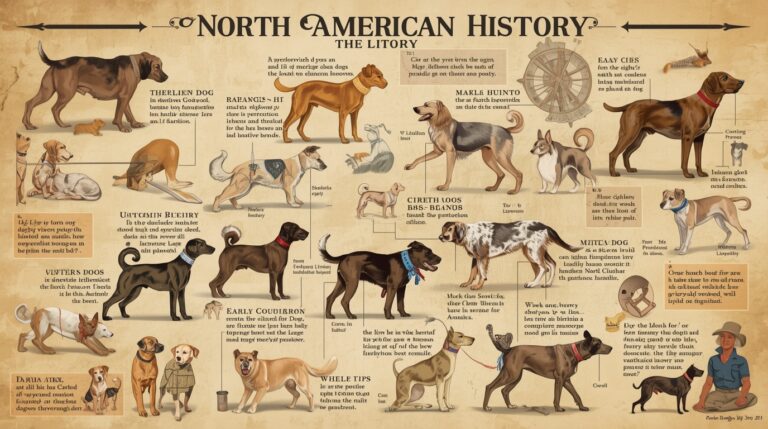
Illustration of Native American and colonial-era dogs alongside early North American humans in a natural landscape setting

History of Dogs in North America

Dogs and Their Deep-Rooted History in North America The history of dogs in North America traces back over 15,000 years, making canines one of the continent’s oldest animal companions. This history involves early domesticated dogs, the migration of humans via the Bering Land Bridge, and significant changes due to colonial influence. Today’s American breeds carry…

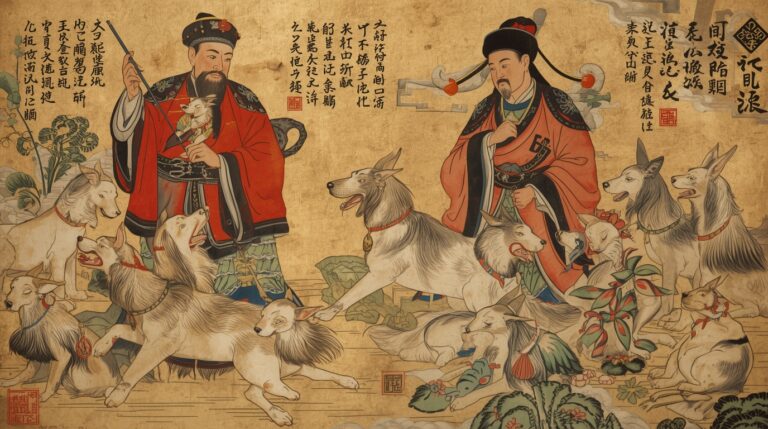
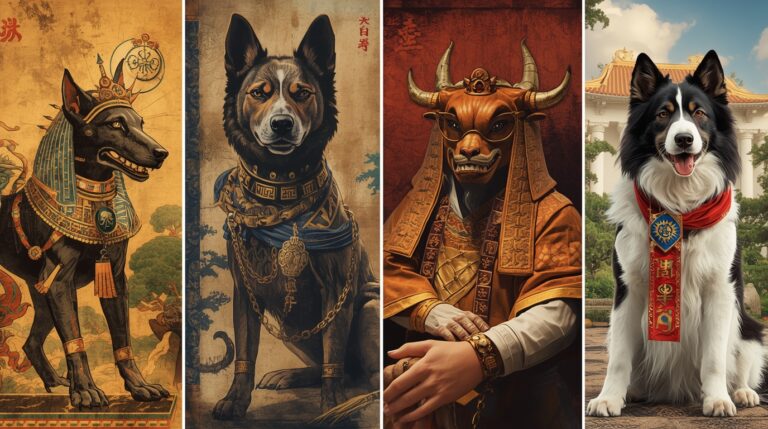
Depiction of dogs in Ancient China and the Tang Dynasty as companions, guardians, and spiritual figures

Dogs in Ancient China and the Tang Dynasty

Introduction: Canines in the Ancient Chinese World Dogs have occupied a special place in Chinese civilization for over 7,000 years. In Ancient China, and especially during the Tang Dynasty (618–907 CE), dogs were revered not just as pets but as symbols of loyalty, protection, and even divine energy. Their presence spanned palaces, temples, marketplaces, and…

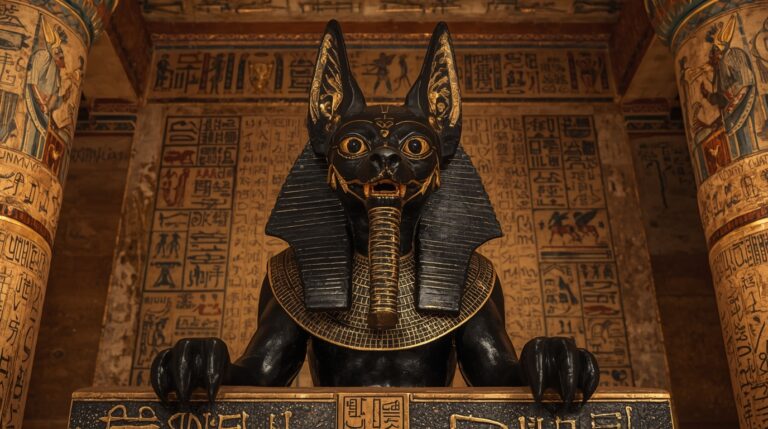
Jackal-headed god Anubis guarding a pharaoh’s tomb in ancient Egyptian burial chamber

Dogs in Egyptian Mythology (Anubis)

Introduction Dogs and jackals held profound significance in Egyptian mythology, particularly through their association with Anubis, the iconic jackal-headed god of mummification, death, and the afterlife. In a culture deeply concerned with mortality, burial, and eternal life, the image of the dog became a powerful symbol of protection, transition, and judgment. From sacred burial rituals…

German Shepherd war dog carrying a message across the battlefield during World War I Image Description: A trained German Shepherd messenger dog running across a smoky World War I battlefield with a capsule strapped to its collar, delivering urgent information between command posts while artillery fires in the background. This photo captures the bravery and tactical importance of dogs in warfare, especially in the messenger role.

Dogs in World War I: Messengers, Medics, and Morale Builders

Introduction During World War I, the battlefield was not only home to soldiers and machinery but also to an army of silent yet courageous four-legged companions—dogs. These animals served in various capacities ranging from messengers and medics to morale boosters. In the trenches and fields of Europe, dogs demonstrated exceptional intelligence, loyalty, and bravery, often…

Medieval painting of a noblewoman with a lapdog

Dogs in Ancient and Medieval Art: Symbolism, Representation, and Cultural Meaning

Introduction Dogs have accompanied humanity not only in daily life but also in the artistic traditions of nearly every historical period. From Ancient Egyptian tombs to Gothic cathedral stained glass, the image of the dog carried diverse meanings—ranging from loyal guardian to spiritual guide, hunting partner, and courtly companion. This article explores how dogs were…

Saluki, Basenji, Tibetan Mastiff, and Chow Chow – ancient dog breeds still alive today

The Oldest Recognized Dog Breeds

What Makes a Dog Breed “Ancient”? An ancient breed is typically one that: Importance of Genetic Studies Modern genomics and DNA analysis reveal that many modern breeds descended from a select few ancient genetic lines, with breeds like Saluki and Basenji standing among the most genetically unique. Why Ancient Dog Breeds Matter Preserving these breeds…

Illustration of famous symbolic dogs from global history, including Anubis, Cerberus, Hachikō, Komainu, and modern therapy dogs

Cultural Representation of Dogs Through History

Introduction: Man’s Oldest Cultural Companion Dogs have accompanied humanity for tens of thousands of years—not only as working animals or companions, but as symbols of protection, loyalty, and divine power. Across civilizations and time periods, the cultural representation of dogs has evolved from sacred guardians to heroic legends, appearing in everything from mythology, religious texts,…

Saint Roch lying sick in a monastery with his healing dog beside him

Dogs in Monasteries and Religious Life

Introduction: The Spiritual Role of Dogs in Religious Spaces Throughout history, dogs have occupied not only domestic and utilitarian roles but also profoundly spiritual functions. In monasteries, convents, and hermitages, dogs were more than mere animals—they served as protectors, companions, and even spiritual symbols. From the healing dog of St. Roch to the fierce fidelity…

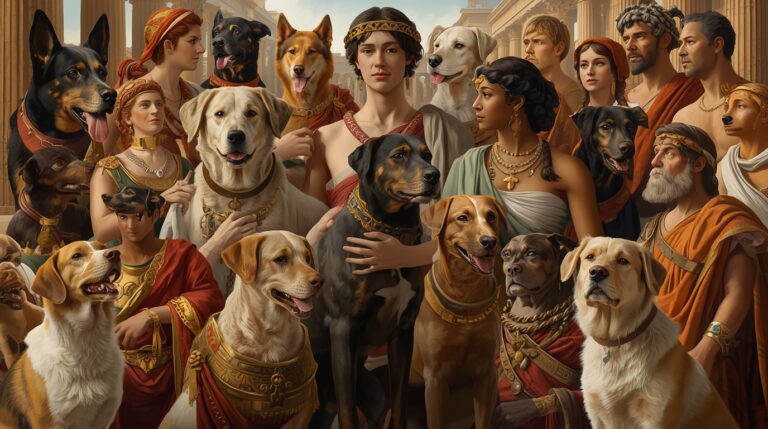
Illustration of dogs in ancient Greek and Roman society, from myth to daily life

The Role of Dogs in Ancient Greece and Rome

Introduction to Dogs in the Classical World Dogs played a vital role in both Ancient Greek and Roman societies. They were not only working animals but also spiritual symbols, mythological figures, and companions. Their presence spanned the spectrum from humble homes to majestic temples and battlefields. Whether depicted guarding gates to the underworld or sitting…