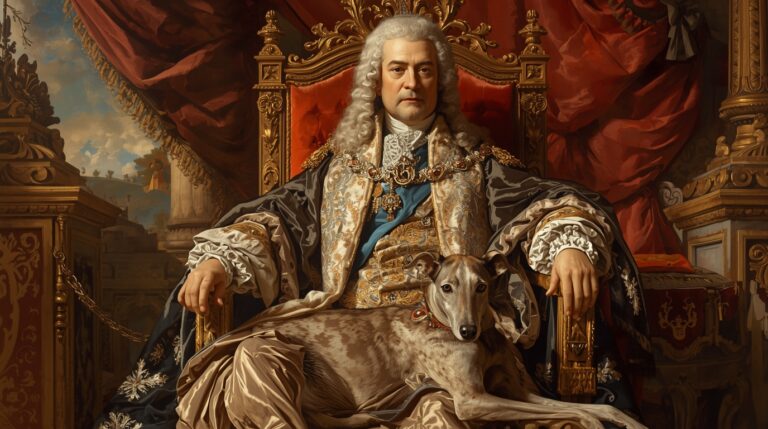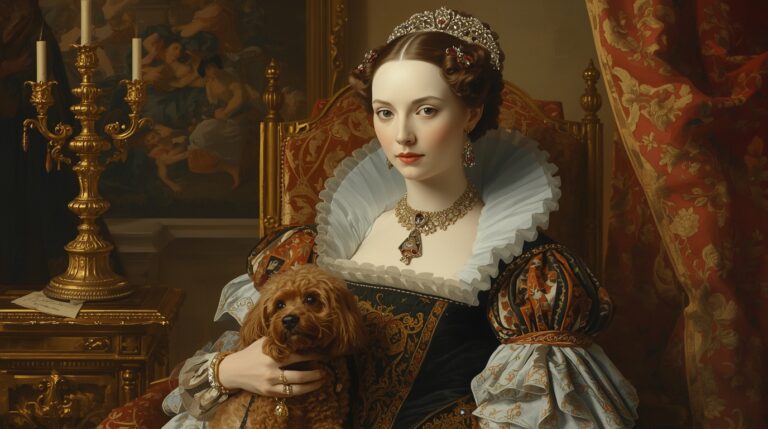
Royal Renaissance lady with lapdog in portrait, symbolizing loyalty and grace

Royal and Noble Dog Companions in the Renaissance

Introduction: Dogs at the Heart of Renaissance Nobility During the Renaissance, dogs emerged as powerful symbols of nobility, loyalty, and refined emotion. While earlier eras often valued dogs for their practical hunting abilities, Renaissance courts embraced dogs as intimate companions and icons of humanistic thought. In royal bedrooms, on tapestries, and beside thrones, dogs were…
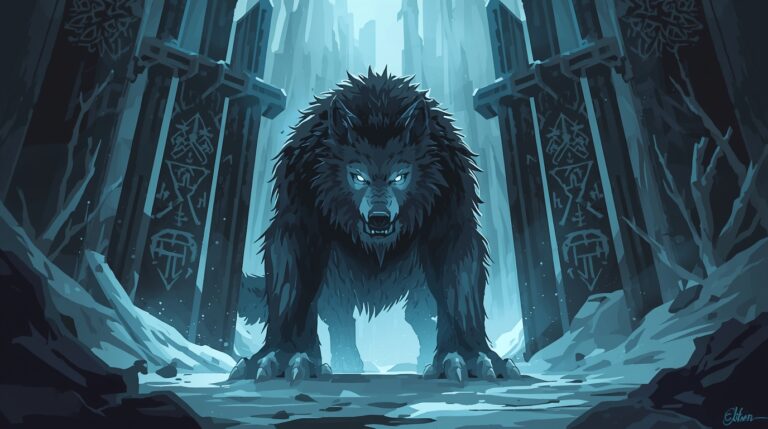
Norse mythology hellhound Garmr guarding the gates of Hel

Dogs in Norse Mythology and Viking Culture

Introduction to Norse Mythology and Viking Culture Norse mythology is a complex belief system that shaped the Viking Age, spanning from approximately 793 to 1066 CE. Rich with mythological creatures, gods, and spiritual realms like Asgard, Midgard, and Helheim, the mythology incorporates a deep connection with nature and animals. Within this system, dogs played diverse…

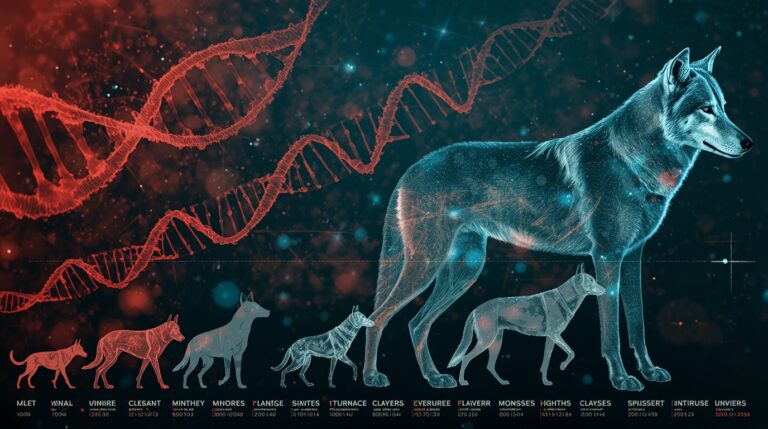
DNA sequencing and canine evolution research showing the genetic link between wolves and early domesticated dogs

Genetic Studies on Dog Ancestry

Introduction: Unraveling Dog Evolution Through Genetics The story of how dogs became humans’ oldest companions is written in their genes. While archaeological sites and ancient art provide visual evidence of early dog domestication, it is through genetic studies on dog ancestry that scientists have traced the evolutionary divergence from wolves, uncovered the timeline of domestication,…

Illustration comparing early domesticated dogs with wolves, showing morphological and behavioral differences caused by selective breeding

How Selective Breeding Shaped Early Dogs

Introduction: From Wolves to Workers The transformation of the gray wolf (Canis lupus) into the domesticated dog (Canis lupus familiaris) stands as one of the most remarkable evolutionary shifts in history. This process was not solely driven by natural adaptation—it was shaped heavily by selective breeding guided by early humans. By choosing dogs with desired…

A regal oil painting of a queen with a small spaniel at her feet, symbolizing loyalty and nobility in royal art

Dogs in Royal Portraits and Tapestries

Introduction: Dogs in Royal Imagery Across centuries, dogs have stood beside kings, queens, and princes, not only as loyal companions but also as rich symbolic figures in royal portraits and tapestries. Their placement in art was intentional—meant to convey power, loyalty, nobility, and familial intimacy. This article explores the presence of canines in royal visual…

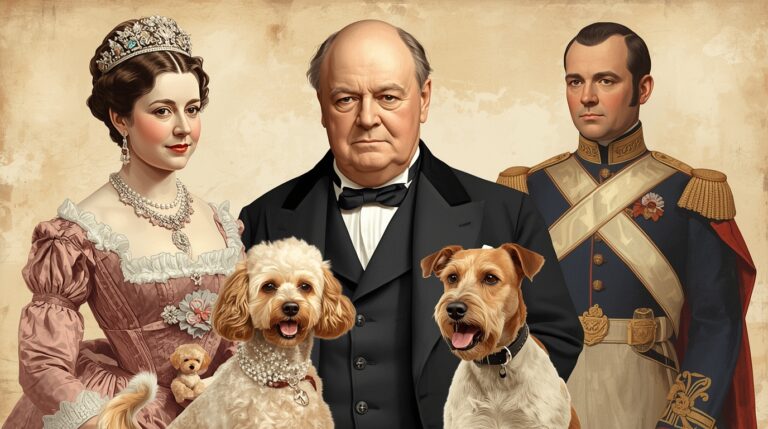
Queen Victoria with Dash, Winston Churchill with Rufus, and Napoleon Bonaparte with Fortune, showcasing the dogs of famous historical leaders

Dogs of Historical Figures (Napoleon, Churchill, Queen Victoria)

Introduction Behind every great leader, there is often a quiet companion offering loyalty without question—sometimes that companion walks on four legs. For centuries, dogs have been more than just pets to historical figures. They have been confidants, symbols of power, emotional supports during wartime, and silent witnesses to world-changing decisions. This article explores the intimate…

Bronze statue of a military dog and handler at the Vietnam War Dog Memorial in Fort Benning, Georgia

War Dog Memorials and Recognition

Introduction to War Dog Memorials War dog memorials are enduring testaments to the loyalty, bravery, and sacrifice of military working dogs (MWDs) across global conflicts. These statues, plaques, and ceremonies serve as public acknowledgments of their essential roles in saving human lives, detecting dangers, and serving under fire. While often unsung in traditional military history,…

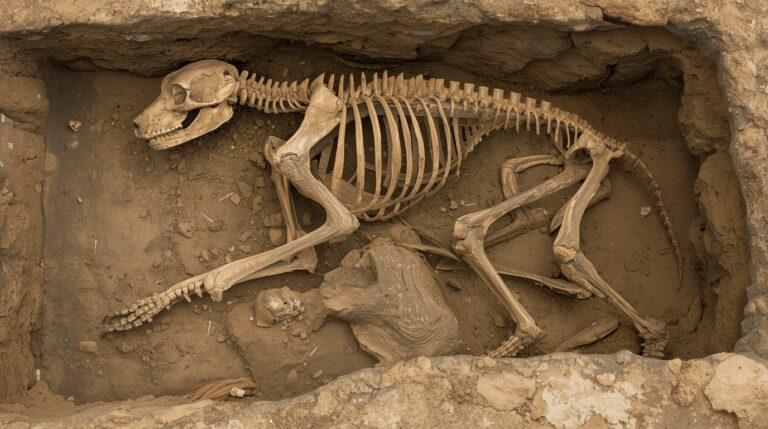
Ancient burial showing a human and dog skeleton side by side, symbolizing early domestication and companionship

Role of Dogs in Early Human Societies

Introduction: A Timeless Partnership The bond between humans and dogs is one of the most enduring and significant interspecies relationships in human history. Long before agriculture, cities, or written language, domesticated dogs (Canis lupus familiaris) walked beside our ancestors. In early human societies, dogs served critical roles as hunting partners, camp guardians, companions, and even…

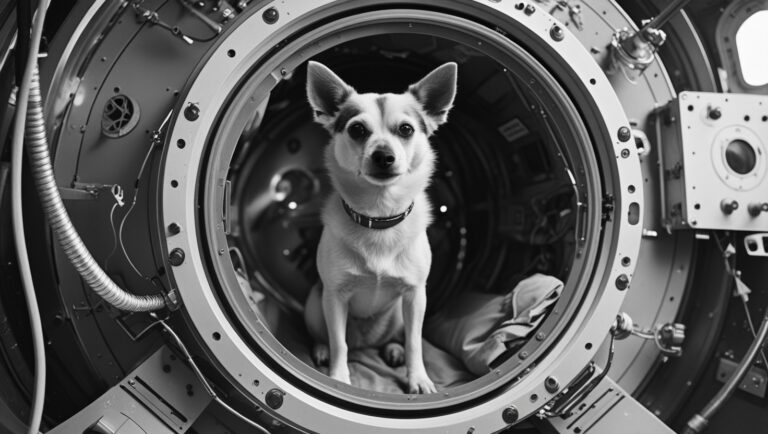
Soviet space dog Laika seated inside the Sputnik 2 module before launch in 1957

Laika: The First Dog in Space

Introduction On November 3, 1957, a Soviet spacecraft named Sputnik 2 blasted off into Earth’s orbit, carrying an unexpected and extraordinary passenger: a small dog named Laika. This marked the first time a living creature entered space and orbited Earth, forever altering the course of space exploration. Laika’s journey was not only a scientific milestone…

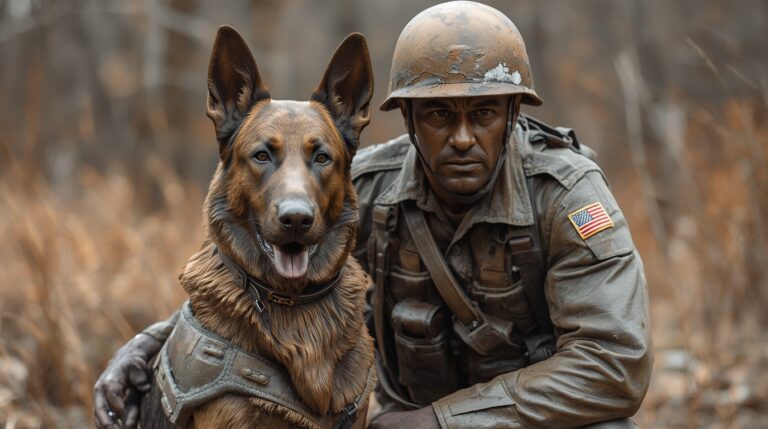
German Shepherd scout dog leading U.S. troops during jungle patrol in Vietnam War

The Role of Dogs in Vietnam and Modern Wars

Introduction to Dogs in Warfare Dogs have served in war zones for centuries, utilized for their keen senses, loyalty, and intelligence. From ancient civilizations to contemporary militaries, dogs have played both combative and supportive roles. Their integration into the battlefield is driven by a unique ability to detect threats, provide emotional support, and complete tasks…

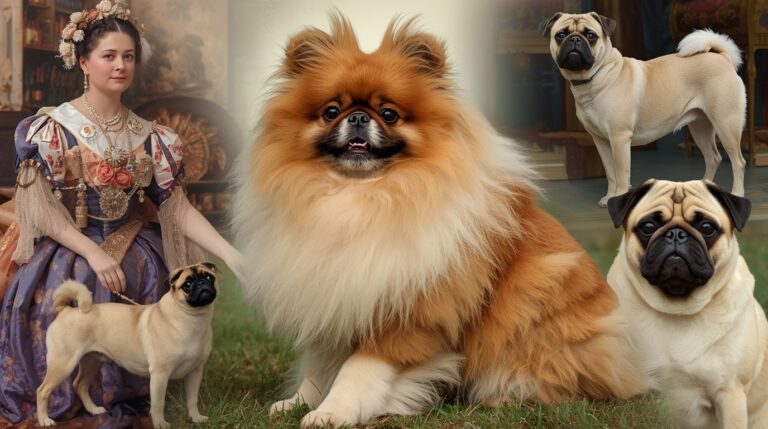
Pekingese, Maltese, Shih Tzu, and French Bulldog representing the evolution of companion dog breeds

Evolution of Companion Breeds

Defining Companion Breeds Companion breeds, often called lap dogs or toy breeds, are dogs bred primarily for human companionship rather than functional tasks. These breeds are characterized by: Unlike working dogs, their main “task” is emotional support, comfort, and presence. Origins of the Human-Dog Bond Dogs were the first domesticated species, dating back 15,000 to…

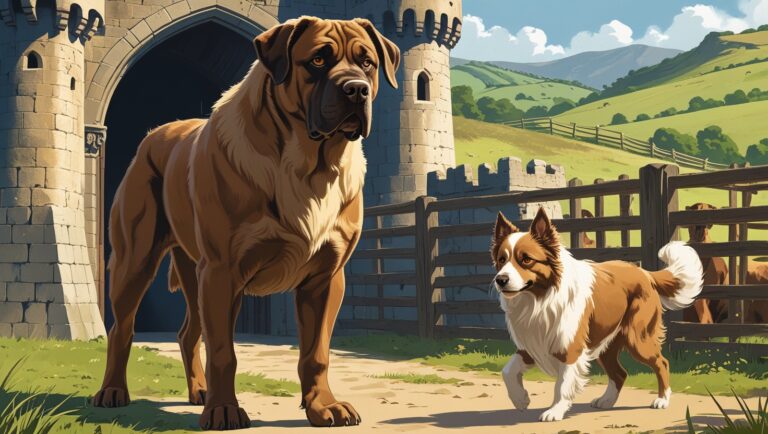
A guard dog protecting a medieval castle in feudal Europe

Guard Dogs and Their Role in Feudal Society

Introduction: Dogs as Defenders of Feudal Life In feudal society, where power was decentralized and lands fragmented among lords, barons, monasteries, and serfs, the need for security was constant. Among the most trusted and versatile defenders of these domains were guard dogs—trained canines that protected castles, manor houses, livestock, and farmland. These dogs played vital…

A statue of Bhairava accompanied by a black dog outside a Hindu temple in India

Dogs in Hinduism and Buddhism

Introduction In both Hinduism and Buddhism, dogs hold complex, multifaceted roles—spanning from sacred protectors and divine companions to symbols of loyalty, dharma, and karmic consequence. While not always deified, dogs are deeply embedded in mythological stories, religious practices, and philosophical teachings, particularly in their roles as guardians of truth, guides to the afterlife, and metaphors…