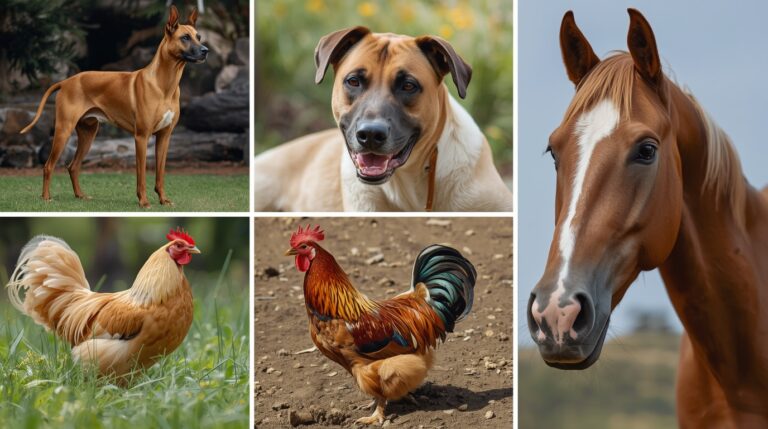
Basenji dog, Egyptian Mau cat, and Arabian horse representing ancient animal breeds still alive today

Ancient Breeds Still Alive Today

Why Ancient Breeds Matter Ancient breeds offer insights into early domestication, cultural traditions, and human evolution. By understanding these living fossils, we gain a better understanding of the relationship between humans and animals, the origin of selective breeding, and environmental adaptation strategies developed across millennia. The Concept of “Ancient Breeds” Defining Ancient in Animal Domestication…

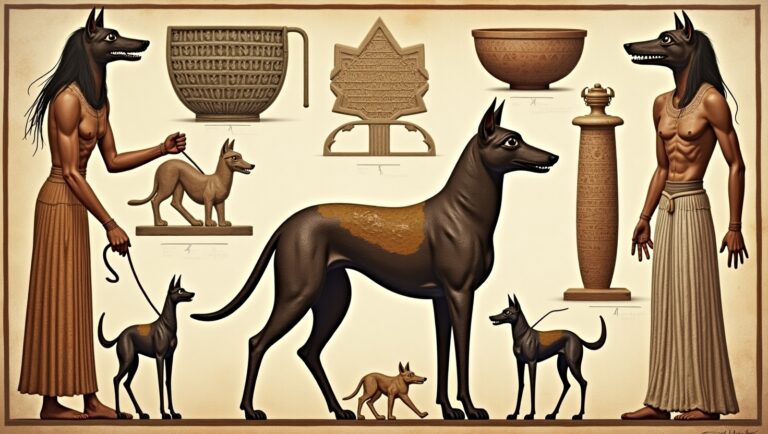
Illustration of nobles using hunting dogs and falcons in medieval Europe

Hunting Dogs and Falconry in Medieval Europe

Introduction: Hunting and Falconry in the Medieval Imagination In Medieval Europe, hunting and falconry were not mere pastimes—they were expressions of power, status, and refined nobility. Within the courts of kings, lords, and barons, animals like hunting dogs and trained falcons were tools of prestige and essential to aristocratic identity. This article explores the profound…

Cylinder seal impression of Mesopotamian hunter with dog and depiction of Gula with canine companion in healing ritual

Dogs in Mesopotamia and Sumer: Sacred Guardians, Healers, and Hunters

Introduction: The Canine Footprint in Ancient Mesopotamia In the cradle of civilization—Mesopotamia, home to the Sumerians, Akkadians, Babylonians, and Assyrians—dogs held a unique place in the social and spiritual hierarchy. Far from being mere animals of utility, dogs in Mesopotamia and Sumer were intertwined with mythology, religion, healing practices, and ritual protection. From the temples…

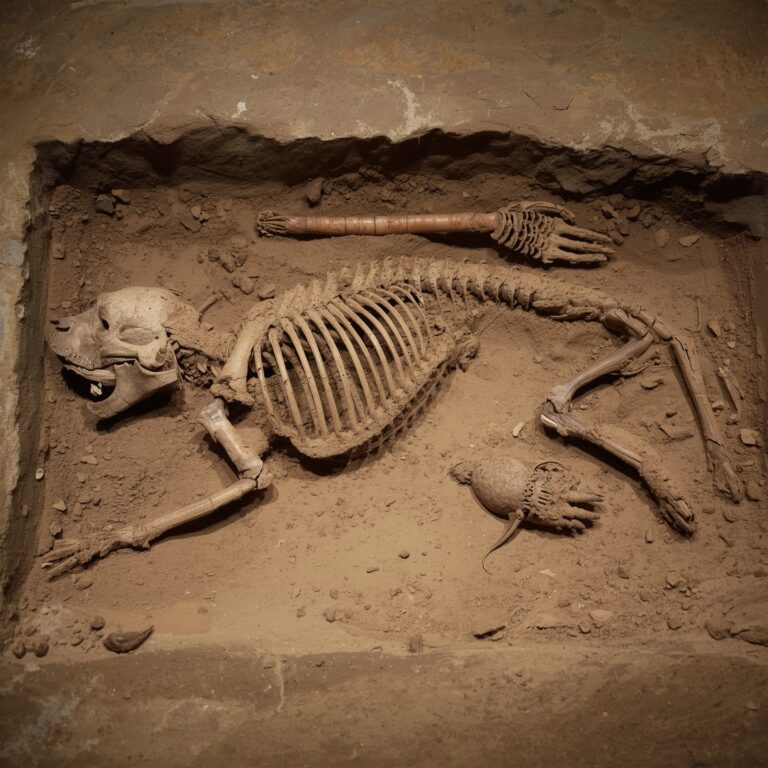
Archaeological site showing human and dog skeletons buried together in Bonn-Oberkassel, Germany

Ancient Human-Dog Burial Sites

Introduction: Unearthing the Ancient Bond Across millennia, one of the most enduring partnerships in human history has been that between humans and domesticated dogs. The discovery of ancient human-dog burial sites across continents offers compelling evidence of this emotional and functional bond. These archaeological discoveries do more than preserve bones; they narrate stories of companionship,…

Archaeologists uncovering ancient dog bones in a burial site, representing the earliest evidence of dog domestication.

Dogs in Ancient Egypt (Deities, Burials, Hunting)

Introduction: Dogs as Sacred and Functional Beings In ancient Egyptian civilization, few animals held as diverse and profound a role as the domesticated dog. Revered as divine guardians, cherished as pets, and deployed as hunting companions, dogs appeared across multiple layers of religion, art, and daily life. Their presence in temple offerings, tomb inscriptions, and…

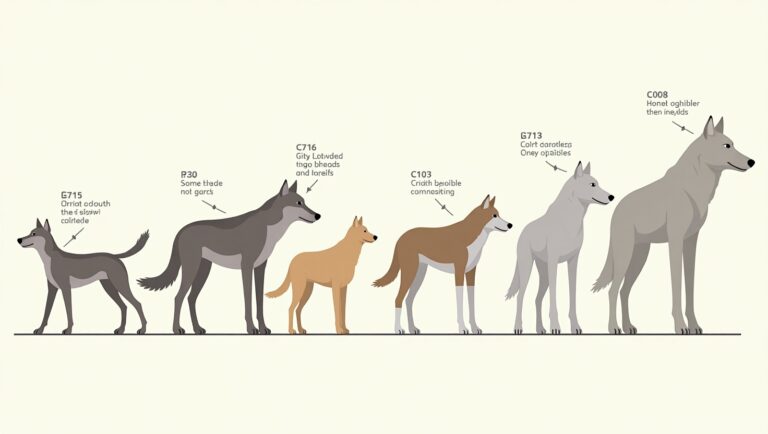
An ancient wolf transitioning into a modern dog, symbolizing the evolutionary journey from wild predator to domesticated companion.

Dog Evolution from Wolves: A 15,000-Year Journey from Wild Predator to Human Companion

Introduction: The Genetic Bond Between Wolves and Dogs The evolution of dogs from wolves is one of the most fascinating examples of domestication in the animal kingdom. Modern domesticated dogs (Canis lupus familiaris) trace their ancestry back to the gray wolf (Canis lupus), sharing more than 99.9% of mitochondrial DNA. Over approximately 15,000 years, wolves…

Illustrated map of the world showcasing regional dog breeds and historical developments in canine domestication

Dog History by Region: A Complete 4000+ Word Exploration of Canine Origins Across the Globe

Introduction to Dog History Dogs, Canis lupus familiaris, are the first animal species domesticated by humans. Their journey from wild wolves to household companions began more than 15,000 years ago, and possibly earlier. No other species has adapted so broadly and deeply to diverse cultures and geographies. Domestication didn’t happen in one place or for…

A historical collage showing dogs from the Victorian era to modern times, including breeds like Pomeranians, German Shepherds, and French Bulldogs.

Modern Canine History (19th Century–Present)

Introduction: Understanding the Modern Evolution of Dogs Modern canine history from the 19th century to the present reflects profound transformations in human culture, science, and society. The transition of dogs from utilitarian animals to beloved companions, service animals, and even influencers mirrors global developments in urbanization, industry, warfare, genetics, and media. Dogs today are deeply…

Illustration of famous dogs like Laika, Hachikō, Balto, and Sergeant Stubby with historical backdrops

Famous Historical Dogs: Canine Heroes Who Shaped Human History

Introduction: The Remarkable Role of Dogs in History Throughout history, dogs have played more than just the role of loyal companions. They have served as war heroes, explorers, presidential icons, and even space pioneers. These famous historical dogs are celebrated not just for their breed or beauty, but for acts of courage, loyalty, and service…

Ancient depiction of mythological dogs including Anubis, Cerberus, and Xolotl in spiritual contexts

Dogs in Mythology, Religion & Folklore

Introduction: The Spiritual Legacy of Dogs Dogs have been more than mere companions for millennia—they are sacred symbols, mythical guardians, and divine messengers in cultures around the world. From ancient Egyptian tombs to Norse underworlds, from Hindu temples to Native American tribal myths, dogs occupy a spiritual role in human history that transcends mere domestication….

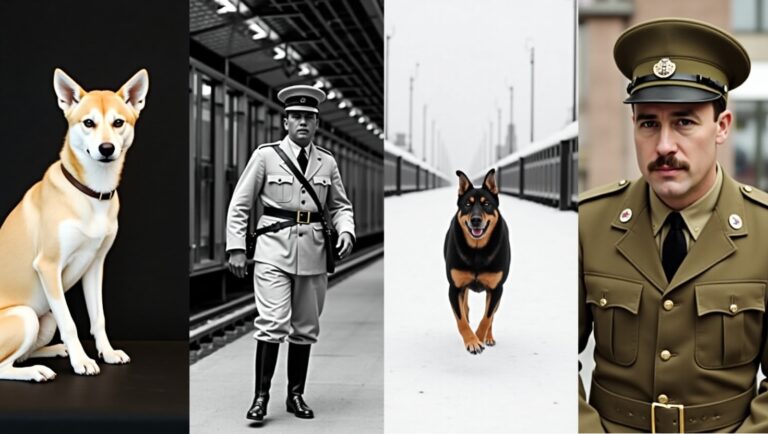
Military and service dogs working with soldiers and comforting veterans, symbolizing loyalty and courage.

Dogs in Warfare and Service: Unseen Heroes on Four Legs

Introduction: Canine Loyalty in Combat and Care Dogs in warfare and service have proven themselves time and again to be loyal, courageous, and highly skilled companions. These remarkable animals play pivotal roles on the battlefield, in disaster zones, and as therapeutic agents for veterans suffering from Post-Traumatic Stress Disorder (PTSD) or physical disabilities. From ancient…

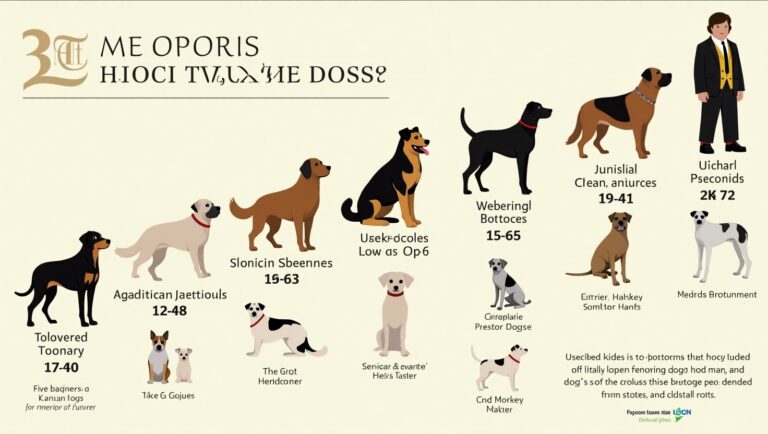
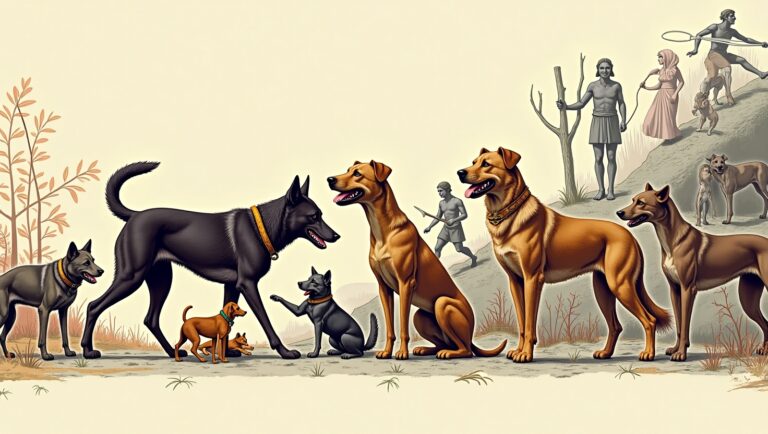
A timeline illustration of the evolution of dog breeds from ancient wolves to modern breeds like the Labrador and Saluki.

The History of Dog Breeds

Introduction to the History of Dog Breeds The history of dog breeds is a rich and complex journey that mirrors the evolution of human society. From ancient wolf domestication to the rise of over 340 modern dog breeds, dogs have transitioned from wild pack hunters to loyal companions and specialized workers. This transformation spans thousands…

Illustration of medieval nobles with hunting dogs and Renaissance portraits featuring lapdogs

Medieval and Renaissance Dog History: Evolution of Canine Roles, Breeds, and Symbolism in European Society

Introduction to Dog History in Medieval and Renaissance Europe The history of dogs in Europe during the Medieval and Renaissance periods reveals an intricate narrative of utility, status, symbolism, and companionship. Between the 5th and 17th centuries, the role of dogs expanded from purely functional tasks like hunting and guarding to becoming key cultural and…

Ancient dog depicted in Egyptian tomb art symbolizing loyalty and guardianship in early civilizations

Dogs in Ancient Civilizations: Guardians, Companions, and Sacred Symbols

Dogs have accompanied humanity for over 15,000 years, evolving from wild wolves into deeply integrated members of ancient societies. Across Mesopotamia, Egypt, Rome, China, Mesoamerica, and other civilizations, dogs served not only as hunting companions or guard dogs, but also as spiritual guides, mythological deities, and status symbols. This article explores the complex and diverse…

Illustration showing the domestication of dogs from ancient wolves to modern breeds over a 20,000-year timeline of human-canine evolution

When Did Dogs First Become Domesticated? A Complete Timeline of Human-Canine History

1. Introduction to Dog Domestication Domesticated dogs (Canis lupus familiaris) are the first and arguably the most enduring companions of humans. Long before agriculture or cities, early humans began forming emotional and practical bonds with wolf ancestors, leading to the emergence of the species we now call “dog.” But the question remains: When did dogs…