Dogs in Greek and Roman Mythology (Cerberus, Diana)
Introduction
Dogs in Greek and Roman mythology held symbolic roles far beyond that of mere animal companions. They were guardians of sacred thresholds, divine hunting partners, harbingers of death, and instruments of justice. From Cerberus, the monstrous hound of Hades, to Diana’s sacred hunting dogs, these mythological canines embodied loyalty, retribution, and the supernatural.
The Greeks and Romans viewed dogs not only as loyal protectors but also as metaphysical beings that existed between the mortal and divine worlds. These ancient mythologies show dogs assisting gods, guarding realms, and punishing mortals—cementing their place in both celestial and chthonic narratives.
Dogs in Greek and Roman Religion and Myth
Dogs appear frequently in classical religion and myth, often representing guardianship, transition, and liminality—occupying the boundary between the living and the dead, the divine and the mundane. In both Greek and Roman societies, dogs were seen as vigilant, sacred, and sometimes ominous. Their keen senses and nocturnal behavior made them natural sentinels and spiritual symbols.
In domestic life, dogs were protectors of the hearth, but in myth, they served deities of death, magic, and the hunt. Whether guiding souls or hunting prey, their roles reflected deep cultural understandings of nature, mortality, and divine justice.
Cerberus: The Guardian of the Underworld
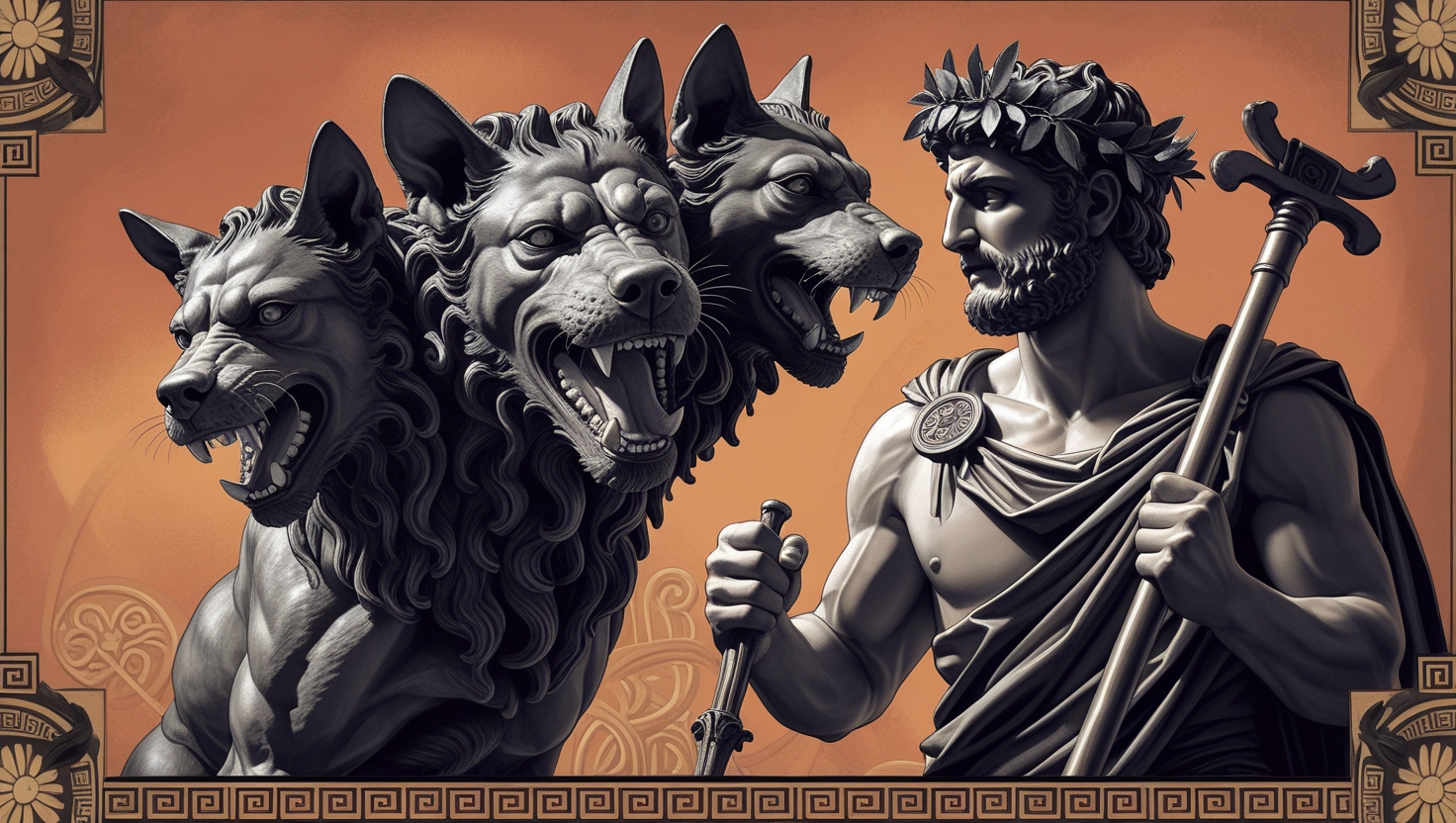
Perhaps the most iconic mythological dog in antiquity, Cerberus was the terrifying three-headed hound of Hades. A monstrous offspring of the monsters Echidna and Typhon, Cerberus guarded the gates of the Underworld to prevent the dead from escaping.
In most Greek texts, Cerberus is described as having three heads, a serpent for a tail, and snakes protruding from his back. His name is often translated as “spotted” or “demonic,” and he appears in numerous mythological tales—most notably in the Twelfth Labor of Heracles, who must capture Cerberus alive and bring him to the surface world.
In Roman mythology, Cerberus retained his fearsome nature but was sometimes depicted more symbolically. Roman mosaics and sculptures often show him chained at the gates of the underworld, reinforcing his role as the threshold guardian between life and death.
Hades and the Mythological Role of Guard Dogs
In Greek religion, the Underworld was ruled by Hades, a god both feared and respected. Dogs, particularly black ones, were sacred to him and often sacrificed during funerary rituals. The connection between dogs and the dead was deep-rooted: they were believed to guide souls, sniff out death, or act as psychopomps, creatures that guide spirits to the afterlife.
Hades’ connection with dogs extended to his own iconography. In vase paintings, he is often flanked by canines, and in cult practices, underground dog sacrifices were sometimes made in his honor. These practices reinforced dogs as sacred creatures capable of traversing mortal and divine realms.
Diana and Her Divine Hunting Dogs
In Roman mythology, Diana—the goddess of the hunt, wilderness, and moon—was frequently depicted with a pack of hounds. The Greek equivalent of Diana is Artemis, who similarly wielded dogs as sacred hunting companions.
Diana’s dogs were swift, loyal, and relentless in pursuit. They symbolize not just the hunt but the goddess’s virginity and autonomy, acting as physical extensions of her will. In myths, these dogs punish those who violate her purity or sanctity.
The most famous tale involving Diana’s dogs is the myth of Actaeon, a hunter who accidentally witnesses Diana bathing. In retribution, Diana transforms him into a stag, and his own dogs—blinded by the spell—devour him. This myth highlights themes of sacred violation, transformation, and punishment via one’s own tools.
Laelaps: The Mythical Hound of Unstoppable Speed
Laelaps is a legendary hound in Greek mythology destined to always catch its prey. This extraordinary dog was gifted by Zeus and later tasked with chasing the Teumessian fox, which could never be caught. The paradox of an unstoppable dog chasing an uncatchable fox created a metaphysical dilemma.
To resolve it, Zeus turned both creatures into stone, immortalizing them as constellations. Laelaps’ myth raises profound philosophical questions about fate, inevitability, and the limits of divine power. As a dog, Laelaps represents celestial inevitability—a hunter whose purpose can never be fulfilled.
Dogs in the Myth of Hecate
Another critical deity associated with dogs is Hecate, the Greek goddess of witchcraft, crossroads, and necromancy. Hecate is often accompanied by howling dogs, which were believed to signal her arrival. Dogs were also sacrificed to her during nocturnal rites, particularly puppies, as offerings to secure her favor in spells and underworld journeys.
In some texts, Hecate herself is described as having a dog’s head or manifesting in canine form. Her connection to dogs emphasizes their role as mediators between worlds—scenting out danger, death, and divine will in hidden places.
Dogs as Symbols of Divine Punishment
Dogs also functioned as agents of divine retribution. In the myth of Actaeon, Diana does not punish the hunter directly but uses his own dogs as instruments of fate. Similarly, in certain versions of the Odyssey, dogs act as omens or guards of sacred spaces.
The Greeks often linked dog attacks or transformations with justice—usually poetic justice. Dogs were also tied to Erinyes (Furies), deities of vengeance who tracked down oath-breakers and murderers. Their snarling, hound-like presence in myth emphasized inevitability of divine punishment.
Molossian Hounds and Real Dog Breeds in Myth
Not all dogs in myth were metaphorical. The Molossian hound, native to Epirus in ancient Greece, was a real breed used for guarding and warfare. These powerful mastiff-type dogs were prized for their size, loyalty, and courage.
Roman authors like Virgil and Columella praised these dogs in agricultural and military texts. They appear in sculpture, coinage, and military gear, symbolizing strength, protection, and Roman might. Their presence in mythology blurred the line between real and symbolic canines, elevating them to semi-divine status.
Dogs in Roman Cult and Sacrificial Rites
In early Roman religion, dogs were occasionally used in sacrificial rites, especially in archaic ceremonies associated with death, fertility, and purification. The Lupercalia festival, for instance, involved the sacrifice of dogs and goats before a purification ritual meant to cleanse the city.
Other deities like Feronia, linked to wilderness and healing, also received canine sacrifices. These rites were symbolic, associating dogs with transition, threshold, and regeneration. As domesticated yet wild, dogs were fitting intermediaries for invoking the gods’ attention.
Comparing Greek and Roman Perspectives on Dogs
While both Greek and Roman traditions respected dogs for their spiritual and symbolic roles, there were key differences in interpretation. Greeks emphasized dogs as mythological and magical, linking them to gods like Hades, Artemis, and Hecate. The Romans, though influenced by these stories, leaned more toward practical and militaristic uses—celebrating dogs for their strength, loyalty, and utility in war and agriculture.
The divine hunting pack of Diana symbolizes purity and wildness in Roman lore, while the Greeks portrayed Artemis with more ethereal, distant reverence. Roman culture also institutionalized dogs in ways Greeks didn’t—breeding for war, integrating them into household shrines, and inscribing them in legal codes.
Artistic Depictions of Dogs in Classical Antiquity
Ancient art is rich with depictions of dogs in mythological scenes. Attic vase paintings show Cerberus at the feet of Hades or in combat with Heracles. Roman mosaics from Pompeii and Herculaneum capture Diana with her hounds in mid-hunt. The phrase “Cave Canem” (Beware of Dog) was found etched in tiles at Roman homes, emphasizing the dog’s role as both protector and symbol.
In sculpture, Diana’s hounds are depicted as sleek and alert, often flanking her sides as she draws a bow. These visuals reinforced the mythological status of dogs and their role in divine iconography.
The Legacy of Mythological Dogs in Modern Culture
Modern literature, games, and films continue to draw on classical canine archetypes. Cerberus appears in franchises like Harry Potter, Percy Jackson, God of War, and Final Fantasy, representing death’s threshold. Diana, as the feminine archetype of autonomy and power, is often shown with dogs as symbols of untamed instinct and loyalty.
These mythological representations echo into modern symbolism—guard dogs representing security, hunting dogs symbolizing focus, and three-headed beasts standing for complex fears. From logo designs to character arcs, the classical dog continues to shape modern narratives.
Conclusion
Dogs in Greek and Roman mythology were more than sacred animals—they were symbols of divine authority, punishment, and protection. Through Cerberus, we understand the boundary between life and death; through Diana’s hounds, we glimpse the sacred wildness of the hunt; and through Hecate’s nocturnal companions, we explore the mystical and the unknown.
Their roles in myth were complex, often embodying both loyalty and violence, compassion and retribution. The enduring legacy of these mythological dogs reminds us of the ancient reverence for canines not only as earthly companions but as spiritual sentinels at the edges of life, nature, and the divine.